Bruce Campbell, B-movies, and how to control the story before it starts
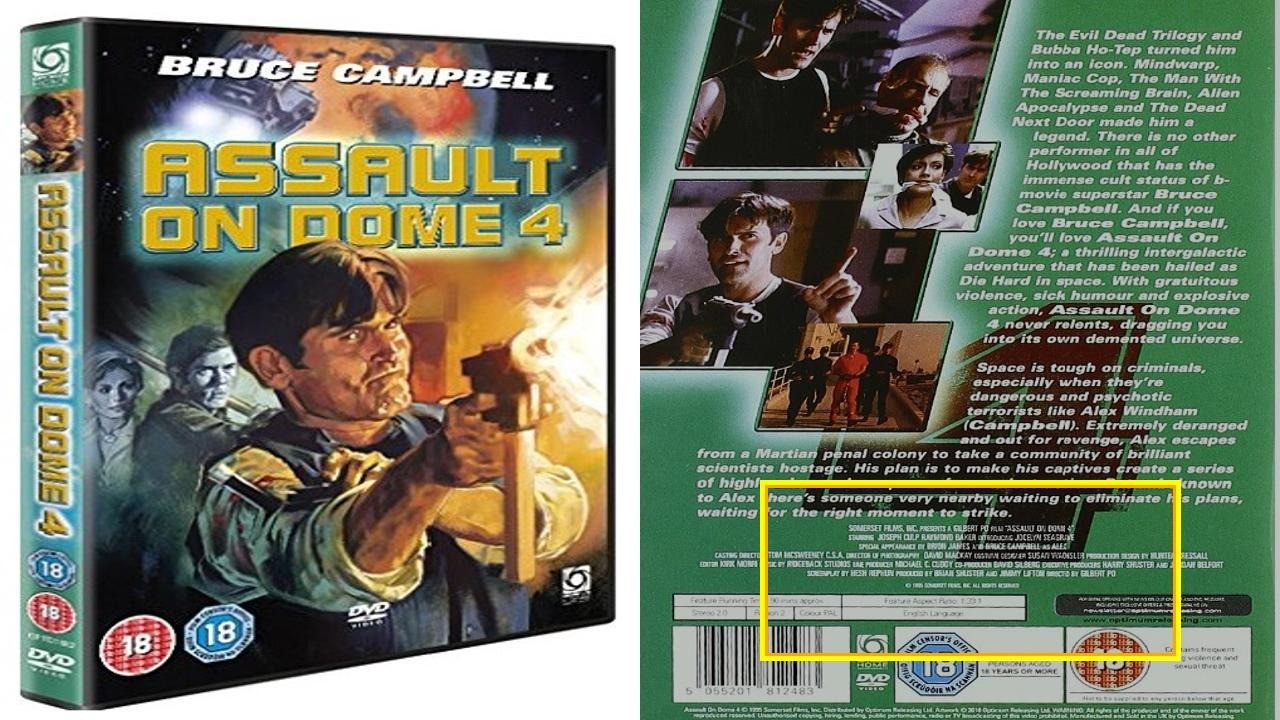
I wrote a movie in the 90s called Assault on Dome 4.
Think Die Hard in space.
Bruce Campbell played the villain.
That alone told you everything you needed to know.
Because Bruce Campbell does not show up quietly.
He shows up and the audience immediately recalibrates.
Oh. This is going to be fun. Oh. This is going to get weird. Oh. We are not taking ourselves too seriously here.
Before a single line of dialogue lands, the signal is already set.
And that matters more than people realize.
Assault on Dome 4 was one of two films I wrote for producer Brian Shuster, a friend and mentor who is now a tech founder and investor.
Back then, we were building something scrappy and contained. A B-movie with ambition. A remote outpost, a terrorist takeover, a lone peacekeeper trying to stop everything from blowing up.
It knew exactly what it was.
And the reviews, years later, say the same thing in different ways.
“It is one of the better Die Hard-style clones.” “It is chaotic in an entertaining way.” And almost universally, “Bruce Campbell is the reason to watch.”
Why?
Because he understood the assignment.
More importantly, he set the tone.
That is what most people miss in business.
They think the work starts when the conversation begins.
It does not.
It starts the moment someone forms an idea about you.
People are not responding to what you say.
They are responding to what they think you are.
And that decision happens fast.
- Faster than your pitch.
- Faster than your explanation.
- Faster than your carefully crafted walkthrough.
If that interpretation is off, everything downstream has to fight it.
Back to the movie.
If Bruce Campbell had played that role straight, or if the tone had been unclear, the audience would not know how to engage.
Are we laughing? Are we leaning in? Are we supposed to take this seriously?
It would not matter how good the third act was.
They would already be watching the wrong movie.
That is what I see every day with founders and CEOs.
They are not struggling because their offer is weak. They are not struggling because their content is bad. They are not struggling because the audience is wrong.
They are struggling because the wrong version of them is walking into the room first.
So they spend the entire conversation correcting it.
Explaining. Reframing. Repositioning in real time.
That is exhausting.
And it does not scale.
The goal is not to get better at explaining.
The goal is to make sure they understood you correctly before you ever spoke.
Because when the signal is right, everything else gets easier.
The right people lean in. The wrong people filter themselves out. The conversation starts where it is supposed to.
You do not have to perform your way out of a bad first impression.
Set it right from the start.
Sell the truth.