Why client talks stall when they begin from the wrong place
On Monday, we covered Bruce Campbell and how the audience decides what they’re watching before a single line lands.
Same principle. Different movie.
Around that same time, I’d written something completely offbeat called Killer Salesmen Hit the Road.
Marc Dacascos (John Wick, Warrior) read it and wanted to star.
Which tells you everything about his taste.
But instead of that, he was in the middle of building a career on much more straightforward action films.
Clean. Controlled. No confusion about what they were.
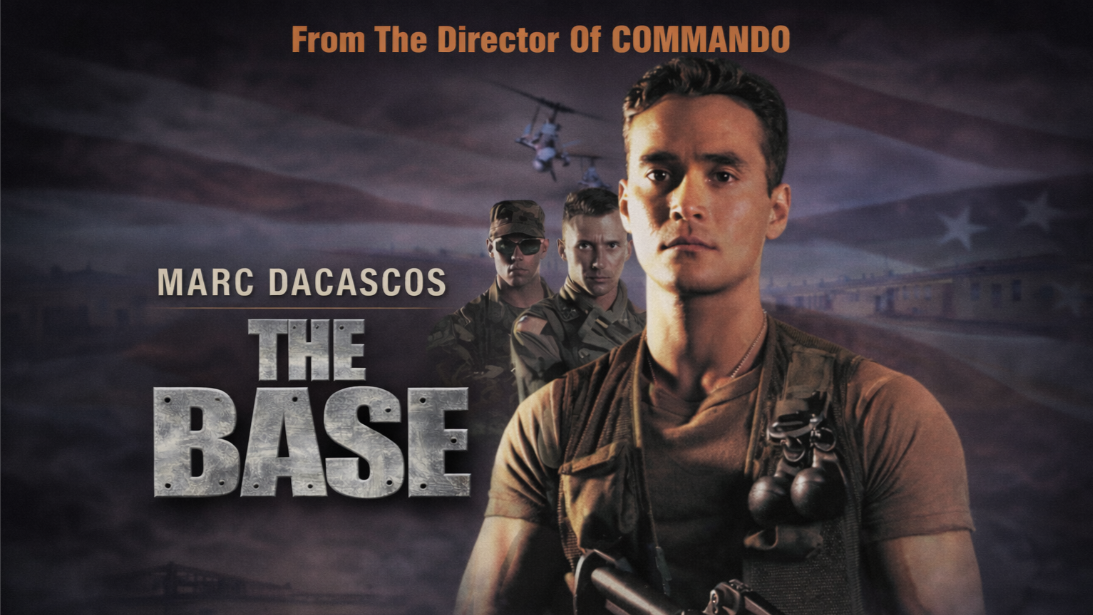
He agreed to do The Base for director Mark L. Lester (Commando) if I would write the script.
So I did.
And here’s what matters.
Killer Salesmen was weird on purpose.
The Base was not weird at all.
It knew exactly what it was.
And more importantly, it made sure the audience knew too.
You know what kind of movie The Base is within five minutes.
Military setting. Locked-down base. Something’s off.
You’re not trying to figure it out.
You already know the rules.
Who’s in control. Who’s not. What kind of ride you’re in for.
It’s not subtle.
And that’s the point.
The reviews say the same thing in different ways.
“Predictable.”
“Familiar.”
“Straightforward.”
Not always meant as a compliment.
But it’s exactly why it works.
Because the audience never has to stop and ask:
“What am I watching?”
They’re already inside it.
Now compare that to a different kind of experience.
You get on a call that should move forward.
On paper, it’s the right person.
But within a few minutes, something feels off.
They’re asking questions that don’t quite line up.
You can tell they’re seeing this as something else.
- So you start explaining.
Clarifying.
Resetting what this actually is.
The call still goes “fine.”
But it never really builds.
It doesn’t go where it should.
That’s the business version of not knowing what movie you’re in.
And once that happens, everything slows down.
Because now the conversation isn’t moving forward.
It’s trying to catch up.
Most people respond by changing things.
- Rewrite the page.
- Adjust the pitch.
- Tweak the positioning.
- Try to be clearer.
And sometimes that helps.
But it doesn’t fix it.
Because the issue isn’t that things need improving.
It’s that something is giving people the wrong idea before the conversation even starts.
In The Base, that never happens.
You’re not watching it thinking it’s a comedy.
Or a political drama.
Or something abstract.
It sets the frame early.
So everything that follows makes sense.
That’s what’s missing in most businesses.
Not effort.
Not quality.
Just the wrong frame getting set too early.
And once that happens, you spend the rest of the conversation trying to recover it.
Fixing it isn’t about rewriting everything.
It’s about finding the one thing that’s creating that first impression.
A line.
A phrase.
A way something is described that puts people in the wrong category before they ever speak to you.
This is the work I do with founders, executives, and speakers.
We start with something real.
A call that didn’t go where it should.
Not the theory. The actual conversation.
Where did it stall?
What were they asking?
What did they think this was?
Then we trace it back.
What did they see or hear before that call that led them there?
Because it always comes from somewhere.
- A line on a page.
- A way something is described.
- A phrase that sounds right to you, but puts the wrong picture in their head.
- When you find it, it’s usually obvious.
And when you fix it, you don’t need to change ten things.
Just that one.
The next conversation feels different.
They’re not trying to figure out what this is.
They already know why they’re there.
You’re not explaining.
You’re continuing.
Same person.
Same offer.
But now it moves.
Most people never find that one thing.
They just keep adjusting around it.
And wonder why nothing fully clicks.
If you’ve had a conversation recently that should have gone somewhere and didn’t…
you already know where this shows up.